
Why a Clear Business Vision Is the Key to Making More Good Things Happen
Summary: As you start thinking about next year, are you planning for the business you have today or the business you ultimately want to build? What if the way we're setting annual goals is limiting what we believe is possible?
There's value in looking beyond the coming year and considering what we really want from our businesses, including greater profitability, a capable team, and more freedom to enjoy life outside of work. A clear business vision gives those goals a direction worth working toward.
https://www.youtube.com/watch?v=res0PPqNwDE
The Business We're Working to Build
As another year of planning approaches, the list of things to accomplish is probably already taking shape. Revenue goals, staffing needs, and improvements to how the business operates are all up for discussion, along with decisions about where to invest time and resources.
Before deciding where to go next, it's worth recognizing how far the business has come and celebrating what went well. Maybe the team pulled together to finish a challenging project, an employee stepped into a larger role, or a change finally made a frustrating part of the business easier to manage. Those accomplishments reflect the work already invested in the company and offer a starting point for considering what we'd like to accomplish in the years ahead.
Even as plans for the coming year take shape, some familiar challenges may remain. Decisions continue to come back to the same desk, client concerns interrupt the time reserved for planning, or responsibilities haven't shifted as much as expected. Despite meaningful progress, the day-to-day experience of running the business may not have changed as much as hoped.
Another year could easily be spent improving the same areas, reaching another set of goals, and continuing to carry many of the same responsibilities. Those improvements may be worthwhile, but it's worth considering whether all that effort is getting us closer to the business we really want.
Are we planning to improve the business we have today, or are we building the business we actually want?

When Annual Goals Aren't Enough
Annual goals are important. Financial targets, priorities, and measurable results help keep the company moving in the right direction.
However, reaching those targets doesn't necessarily mean the business is becoming easier to operate or that it is providing the freedom originally envisioned.
Revenue may have increased with additional clients, but the team and processes haven't developed enough to handle the extra workload independently. More employees have been hired, yet many decisions still return to the same desk because responsibilities and authority haven't kept pace with growth. A more structured approach to delegation helps responsibilities move off our desks and stay there.
As the next planning cycle approaches, increasing revenue or hiring another employee may seem like the natural next steps. Those could be worthwhile goals, but will they change how the company operates?
Imagine having a leadership team that confidently manages daily operations, consistently strong profitability, and more time for strategy or life outside of work.
With a clear business vision, developing leaders and improving decision-making become priorities alongside increasing sales. Growth remains important, along with the creation of the structure and capabilities needed to support it.
The Value of a Three-Year Vision
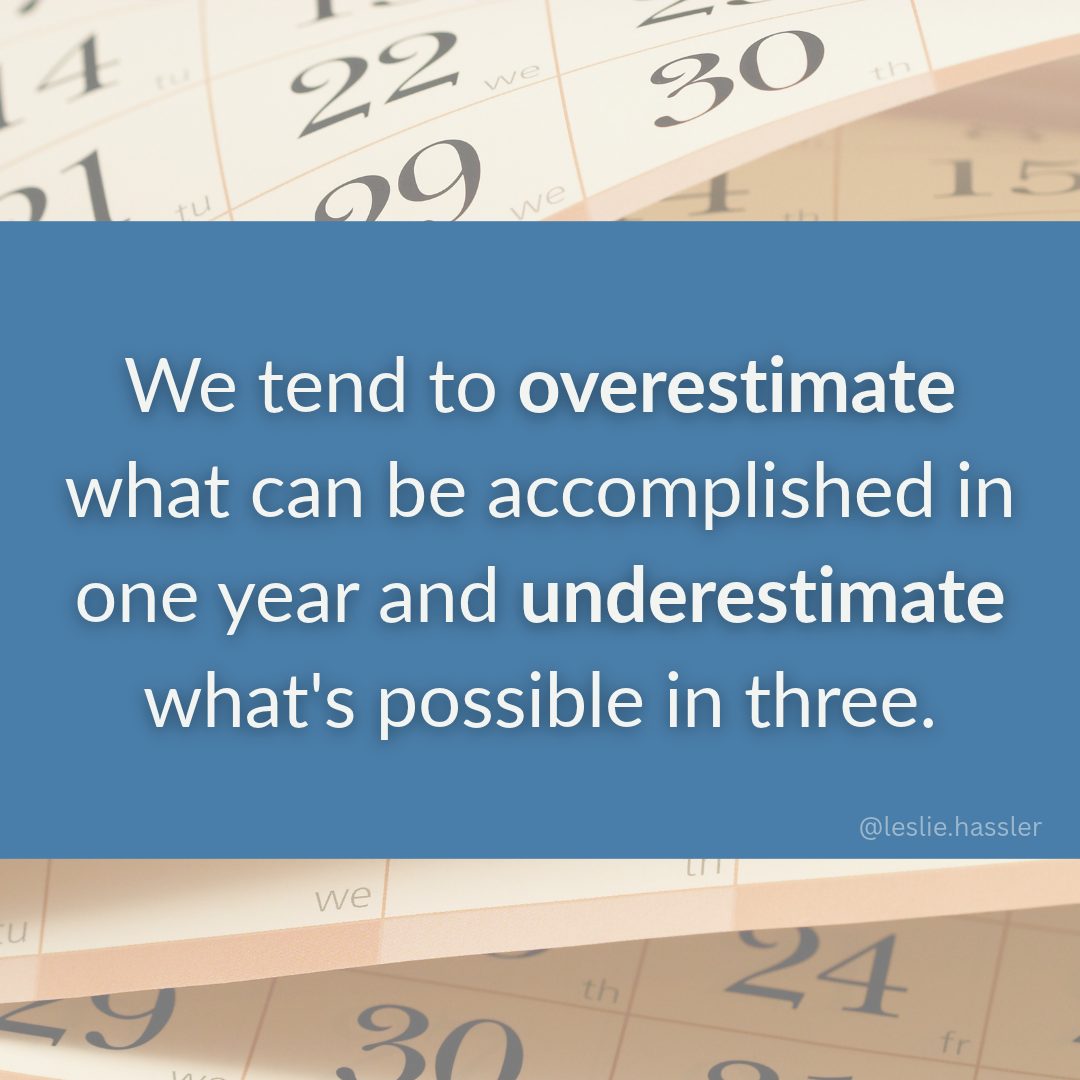
There's an idea we often share with business owners: as humans, we tend to overestimate what can be accomplished in one year and underestimate what's possible in three.
The year begins with a commitment to delegate more responsibility, develop managers, and finally recover some of the time spent handling daily operations.
Several months later, questions still need answers, managers are working through unfamiliar situations, and processes aren't functioning quite as expected. The effort has been considerable, but the results haven't come as quickly as hoped. At some point, handling everything personally may start to seem easier again.
Yet developing a capable leadership team takes time. During the first year, much of the effort may involve defining responsibilities, improving processes, and helping employees become more confident making decisions. As those capabilities develop, greater improvements become possible.
We may be expecting a three-year change in how the business operates to happen within twelve months.
Starting with a three-year business vision makes it easier to work backward and establish realistic expectations for the first year. Rather than expecting one-third of the desired results annually, the first year might represent only 15 or 20 percent of the overall progress because the necessary capabilities are still being developed.
Thinking further ahead allows us to pursue meaningful improvements without becoming discouraged when results take longer than expected.
Getting Everyone Moving in the Same Direction
As the business grows, success increasingly depends on employees who can make decisions, take ownership of responsibilities, and contribute to the company's progress.
That's difficult when the intended future exists primarily in our own minds. Yet a shared direction matters: a 2025 Gallup study found that employees who strongly agree their organization's mission or purpose makes their job feel important are 3.6 times as likely to have a strong sense of purpose in their work.
Increasing revenue may be part of a larger plan to build a more profitable company with stronger leadership and less dependence on daily involvement. Employees, however, may only hear that the company needs more clients and greater productivity.
Sales focuses on generating business, operations manages the workload, and department managers handle whichever issues require immediate attention. Everyone is contributing, but without understanding the larger plan, decisions may not support the same long-term outcome.
Sharing a clear business vision creates an opportunity to explain what the company is working toward and why it matters.
With that understanding, departmental priorities, leadership development, and operational improvements can be connected to the company's future. Employees still need clear responsibilities, reliable information, and the authority to make decisions. Understanding how their contributions fit into the larger plan helps them make better choices about their work. When that structure isn't in place yet, fractional COO support can help clarify ownership and build the systems a team needs to operate without us.
As more responsibilities move beyond our own desks, having everyone work toward the same future becomes increasingly important.
Make the Business Vision Real and Meaningful
Wanting greater profitability, a stronger team, or more freedom is a reasonable starting point. What would achieving those goals mean?
Imagine an ordinary workweek with a team capable of handling most operational decisions. What conversations would take place during leadership meetings? How would it feel to enjoy a vacation without spending hours each day checking on the business?
Imagine being three years into the future, enjoying what all that hard work has made possible. Maybe it's feeling the warmth of the sun during a family vacation without worrying about what's happening at the office, hearing your team confidently make decisions, or celebrating an important milestone together. Think about what that experience would look, sound, and feel like, right down to the smallest details.

Getting specific helps us understand what success would mean in everyday life.
It's equally important to understand why that future matters. Why this vision? Why now? Why us? Why is the impact important? Sometimes it takes asking why a few more times to understand what really matters about the future we're working toward.
Greater profitability may be the initial goal, but further reflection could reveal a desire for financial security, opportunities to invest in employees, or greater freedom to spend time with family. Understanding those motivations helps clarify priorities and makes it easier to communicate why the company's direction matters.
That's also why we recommend creating separate business and personal visions. For the personal vision, consider spirituality, health, finances, family, friends, and the impact we'd like to have. The goal is to think about what life should look like three years from now, alongside what we're building in the business.
The two visions need to support one another. If the personal vision includes more family time, travel, or better health, the business plan needs to account for the leadership, profitability, and operational stability required to make those priorities possible.
A successful business and a fulfilling personal life can exist together when both are considered in the planning process.
Today Begins Your Three-Year Business Vision
Before finalizing another annual plan, set aside time to consider what the business could look like in three years.
- Mark the timeline. Start with today's date and the date three years ahead.
- Picture five areas of the business. Consider revenue, impact, team, leadership, and clients. What would each look like three years from now? Think about profitability, the responsibilities handled by the team, how decisions are made, and the level of involvement required in daily operations.
- Make the future specific. Consider what success would look and feel like, why achieving it matters, and how the business would support personal priorities. These five steps to achieving your business vision can help turn it into a measurable plan.
- Work backward to year one. Once the three-year vision is defined, identify what needs to happen during the first year. Some improvements may produce results quickly, while others will require time to develop the people and processes needed for future growth. Our Ultimate Strategic Planning Workshop walks through creating both a three-year and a one-year vision and turning them into a 90-day plan.
Challenges will still arise, and circumstances may change along the way. Some goals will take longer than expected, and new opportunities may require adjustments to the plan. Having a clear business vision helps us make those decisions with a better understanding of the company we're working to create.
Three years from now, success should mean more than another increase in revenue or another completed list of annual goals. Consider what it would mean to have a more profitable, sustainable business, a team capable of taking greater responsibility, and the freedom to enjoy more of life outside of work.
There's also something to be said for enjoying the business along the way. After all, building a successful company should be rewarding, fulfilling, and a whole lot more fun.
